Showing posts with label girls. Show all posts

Friday, August 3, 2018

Why YA Gothic Fiction is Booming - and Girl Monsters are on the Rise

An 18-year-old girl prepares to die to enable the birth of her half-vampire baby. Her spine is broken in the process, and the fanged baby begins to gnaw its way through her stomach before the girl’s husband performs a vampiric Cesarean section. This is a crucial moment in Stephenie Meyer’s Twilight novel series, published from 2005 to 2008.
Zoey Deutch in the film Vampire
Academy (2014). Angry Films,
Kintop Pictures, Preger Entertainment.

Meyer’s books heralded a new, and continuing, wave of Gothic fiction for Young Adult readers, which revisits familiar literary Gothic conventions: ancient, ruined buildings and monstrous supernatural figures like the vampire, werewolf, ghost and witch.

The Gothic romances of the 18th century, such as the novels of Ann Radcliffe, and the enduringly popular Bram Stoker’s Dracula (1897), sought to recreate feelings of terror and horror for an audience of adult readers. Today, however, most Gothic fiction is being published for, and read by, young people. Surprisingly, it has proved to be the ideal genre for exploring the grotesque and frightening aspects of coming of age, and metaphorically representing pressing social issues such as racism and gender inequality.

The phenomenally popular YA genre, targeted at readers between 12 and 18 years old, evolved from realist novels of the 1960s. These books were preoccupied with the struggles of adolescence set against a backdrop of social issues. Now, though, the genre often looks to the supernatural. Beyond Twilight, some of the most popular YA Gothic series also focus on the “lives” of vampires who are protagonists rather than foes.

Richelle Mead’s six-book Vampire Academy (2007-2010), now adapted into a TV series, is about a teenage girl who is a Dhampir (half-human, half-vampire). She becomes entangled in a forbidden romance with her instructor as St Vladimir’s Academy, while learning how to defeat evil vampires named Strigoi.

Ashley Lyn Blair in Vampire Academy: The Officially Unofficial Fan
Series (2016). idmb

The YA Gothic revival has also embraced a wide range of supernatural entities. Cassandra Clare’s Shadowhunter Chronicles, a cross-media franchise that includes the Infernal Devices and Mortal Instruments novel series, charges angel-blooded humans with the task of protecting regular humans from a range of supernatural beings.

The Nephilim, or Shadowhunters, are busy controlling demons, warlocks, werewolves, faeries and vampires, but critically, it is their part-supernatural status that enables them to serve as protectors.

Clare has said that she did not write her series for young adults (and indeed almost half of the readership of YA fiction might be adults). Nevertheless, her teenage protagonists have resonated with readers of the same age.

The Gothic, and its newer sub-genres like paranormal romance, have a unique resonance with teenagers. They are poised in a transitional space between childhood and adulthood, neither quite embodying the stage they are leaving behind nor fully the thing that they are in the process of becoming. It is unsurprising, then, that they have eagerly embraced the Gothic’s themes of the liminal and the monstrous, as well as its fixation on romance and sex.

Another significant element of the current YA Gothic revival is the emergence of the girl monster. In earlier manifestions of the “female Gothic”, first published in the 18th century by women writers, female protagonists were often courageous, but simultaneously passive and victimised. The plots of the female Gothic reflected the comparative powerlessness of women at the time and their fears about their vulnerability and entrapment within domestic roles and patriarchal society.

In contemporary YA Gothic, girl monsters, who can constitute a threat to others and themselves, disrupt the plotline of male monster and female victim.

Why now?

The most obvious catalyst for the embrace of Gothic conventions in literature for young people is J.K. Rowling’s Harry Potter series. Its popularity signalled a warm embrace of fantasy fiction that confronted the eternal dilemma of the battle between good and evil, charging a child - and later teenage protagonist - with the ability to save the world. While Hogwarts School of Witchcraft and Wizardry was not necessarily Gothic, the Potter phenomenon opened the way for the publication of numerous titles that embraced the possibilities of young protagonists with supernatural abilities.

Read more: Rethinking Harry Potter twenty years on

Most significantly, Meyer’s Twilight series about human Bella Swan and “sparkling” vampire Edward Cullen, combined this staple figure of Gothic fiction with the teen romance novel. The Twilight novels were bestsellers internationally and the saga was voted into the number one position in Australian book chain Angus & Robertson’s Top 100 Books poll of 2010. The Twilight universe expanded from books into a highly successful film series.
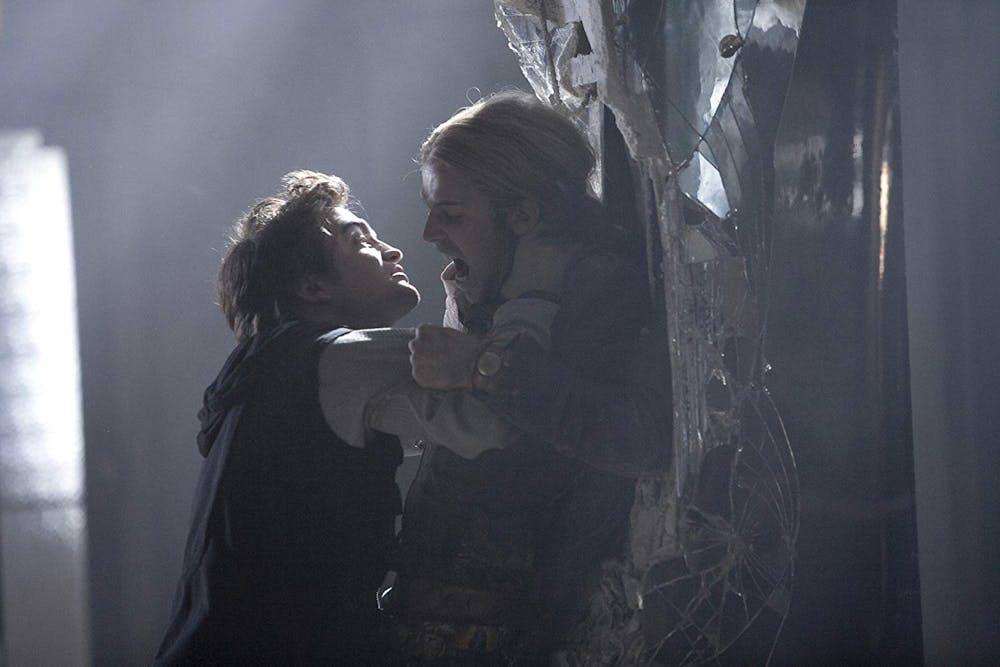
Robert Pattinson and Cam Gigandet in Twilight (2008). Summit
Entertainment, Temple Hill Entertainment, Maverick Films.
The Gothic has had several major periods of popularity since its first appearance in 18th-century England, with Horace Walpole’s novel The Castle of Otranto (1764). In each subsequent revival of Gothic fiction, the genre has been reworked and reinvented to address current cultural concerns.
In particular, the monsters that haunt the pages of Gothic novels are transformed with shifting fears and anxieties. In her influential book Our Vampires, Ourselves Nina Auerbach explains that “every age embraces the vampire it needs”, and this comment can be extend to Gothic monsters more generally.

Contemporary YA fiction blurs the line between good and evil. In Gothic novels of the 19th century, monsters were usually wholly “Othered”. A Victorian-era vampire such as Stoker’s Dracula, for instance was depicted as evil, foreign, and frighteningly different to the British human.
Gary Oldman as Count Dracula in the 1992 film version of the Bram
Stoker novel. American Zoetrope, Columbia Pictures Corporation.
But contemporary monsters are no longer necessarily imagined as racially different or set in opposition to the human. Moreover, they are often represented sympathetically, especially in stories told from their perspective.

These include the iZombie comic series, in which the protagonist must eat brains on a monthly basis to survive, and Claudia Gray’s Evernight series, in which the reader is not even aware that the girl protagonist is a vampire for half of the first book. Indeed, as Anna Jackson explains in New Directions in Children’s Gothic, “the monsters have become the heroes” in contemporary children’s Gothic.

The passive heroine

Most Gothic novels for young people contain a romance plot. This is often because the protagonists’ age places them in the transitional zone for entering adulthood, which is demarcated by sexual experience.

Read more: How long have we believed in vampires?

In a typical YA Gothic novel, such as Twilight, a plot in which a human or monstrous girl protagonist falls for a boy who is not her “type” can dissolve the boundaries between monster and human. These monstrous love interests range from traditional Gothic ones - vampires, werewolves, zombies, ghosts and witches - to newer figures such as fallen angels and faeries. The key challenge to be overcome in these novels is the barriers posed to love by supernatural monstrosity, including the physical dangers to humans, as well as social discrimination about “cross-species” love.

In one of few major studies of teen romance fiction, published almost 30 years ago, Linda Christian-Smith described these novels as a “site of ideological struggles for young women’s hearts and minds”. In particular, she refers to teen romance fiction’s emphasis on heteronormative coupling and motherhood. Little has changed with respect to depictions of sexuality since, despite the YA Gothic’s embrace of diverse human-monster relationships.

Most romances in the genre are heterosexual. They do often emphasise the heroine’s agency through her supernatural abilities and ability to choose between men or move between relationships. However, the human heroines of the Twilight series and Lauren Kate’s Fallen series, in which the heroine becomes drawn to a boy who is a fallen angel, are comparatively indecisive and continue to need rescuing.

Tellingly, Joss Whedon, the creator of the TV series Buffy, The Vampire Slayer (1997-2003), has described Twilight’s Bella as lacking empowerment, overly fixated on her romantic options, and “completely passive”.

Novels with passive human heroines allow the reader to use the fantasy of romance as a temporary escape from real-world gender inequality. Yet they also reinforce its reality for female readers.
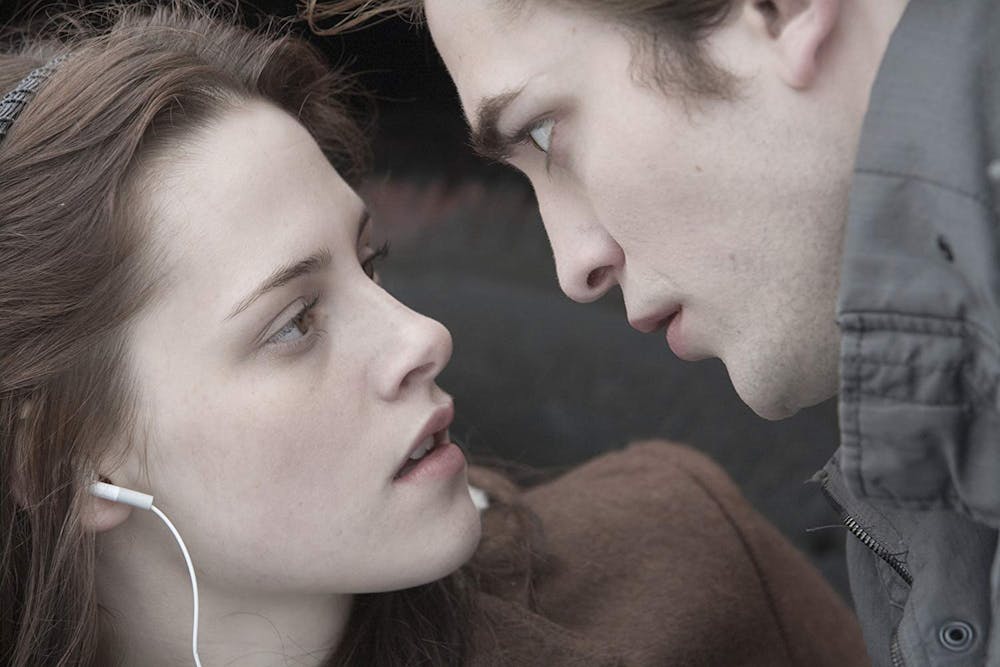
Kristen Stewart (Bella) and Robert Pattinson (Edward) in Twilight (2008).
Summit Entertainment, Temple Hill Entertainment, Maverick Films


The girl monster

Supernatural heroines, however, are often able to breach the confines of traditional femininity and become extraordinary in ways that Twilight’s Bella and other human characters cannot. In a number of YA Gothic novels, such as Mead’s Vampire Academy, the protagonists disrupt expectations of feminine behaviour because of their unique, and often poorly understood, supernatural abilities. These special powers become the focus of anxieties about the girls’ coming of age, as they pursue romances that place their broader communities under threat.

The Vampire Academy series was sufficiently popular in 2010 for three of its six titles to sell between 300,000 and half a million copies in hardcover in the US alone, according to Publishers Weekly. However, unlike the Twilight series, on which it likely attempted to capitalise, its protagonist, Rose, is half-vampire, half-human and a monster in her own right. Rose shares a close bond with vampire Lissa, and is driven to break the Academy’s rules in order to save her friend when she is kidnapped, highlighting that girls are also capable of protecting and rescuing people they love.

Ashley Lyn Blair (Lissa) and Jennifer Studnicki (Rose) in Vampire Academy:
The Officially Unofficial Fan Series (2016). idmb

Vampire Academy positions Rose as a sexual object, particularly in the eyes of a privileged type of vampire (Moroi), who find Dhampir women especially attractive because of racial differences. Rose enjoys her sexuality and dresses to take advantage of it, but this sexuality operates within her definition as a strong young woman:
First they saw my body and the dress. Testosterone took over as pure male lust shone out of their faces. Then they seemed to realize it was me and promptly turned terrified. Cool.
Rose is able to reject unwelcome advances and possesses the physical strength and skills to stand up for herself, suggesting a fantasy of empowerment and equality.

Lissa, meanwhile, thwarts what amounts to an attempted gang rape of a drugged girl. A group of male Moroi students attempt to take advantage of a female feeder (person who permits their blood to be sucked) at a party, “doing a sort of group feeding, taking turns biting her and making gross suggestions. High and oblivious, she let them”.

The supernatural female protagonists in YA gothic novels are responsible for their own safety and protection, yet they also have a responsibility to keep others safe. These heroines have some romantic and sexual agency in a way that can be considered progressive. However, their desire is also framed as disruptive and dangerous and there is an obsessive fixation on the pursuit of romance above the girl’s own development, education and safety.

In other words, the superficially radical potential of girl heroines with superhuman physical strength, mind-reading abilities, and the potential to kill can merely be a decorative smokescreen for the reinforcement of traditional feminine values.

The good and monstrous within

The recent proliferation of Gothic YA novels is skewed toward a female readership with a focus on girl protagonists, and significant emphasis on their quest for romance. Nevertheless, there are a number of series with boy heroes. For example, Ransom Riggs’ Miss Peregrine’s Home for Peculiar Children (the first book of which was recently filmed by director Tim Burton), focuses on a 16-year-old human boy, Jacob.
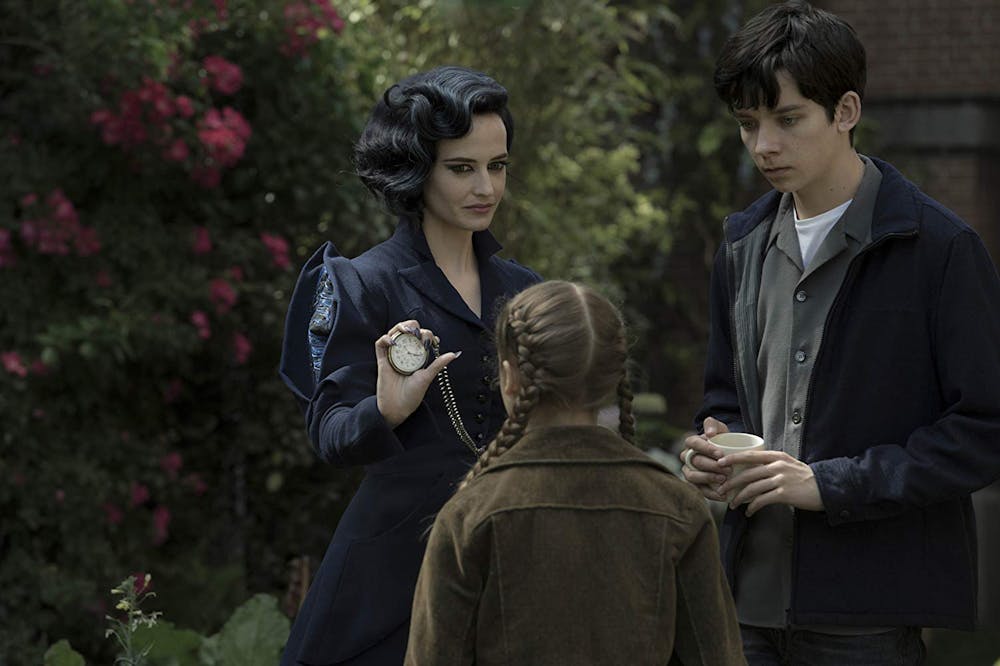
Miss Peregrine's Home for Peculiar Children (2016).
Twentieth Century Fox, Chernin Entertainment, TSG Entertainment.

Jacob has inherited an ability that makes him uniquely able to help the supernatural peculiar children of the title, who are threatened by creatures named hollowgasts who are driven to murder peculiar children in order to feed upon their souls. For Jacob, his transition to adulthood is less about romance and more about self-discovery, connections with his ancestors, and finding a way to negotiate his new-found abilities and responsibilities.

In The Gothic Child, Maria Georgieva suggests that the traditional Gothic novel is preoccupied with “the growth and transformation of the child, the crisis of adolescence and the sometimes painful transition into adulthood”. She is referring to the child’s potential to grow into the hero, heroine or villain.

However, the recent surge in YA Gothic fiction takes this fascination with the darker aspects of childhood in a different direction. The girl heroine, in learning to manage the physical and emotional shifts of her development and more complex relationships in romance, can both be a threat and a saviour to others.

The fuzziness of her nature reflects both the liminal status of the teenager and new cultural understandings of the monster, who now more often resembles the typical American teen than an undead Romanian count.

Instead of contemplating a child’s potential to head towards either good or evil, recent Gothic YA acknowledges the possibility of both the good and the monstrous residing in one person.


This article was originally published on The Conversation. Read the original article.

Thursday, October 12, 2017

Playboy, Brooke Shields and the fetishisation of young girls


File 20171011 2047 wblq9d.jpg?ixlib=rb 1.1
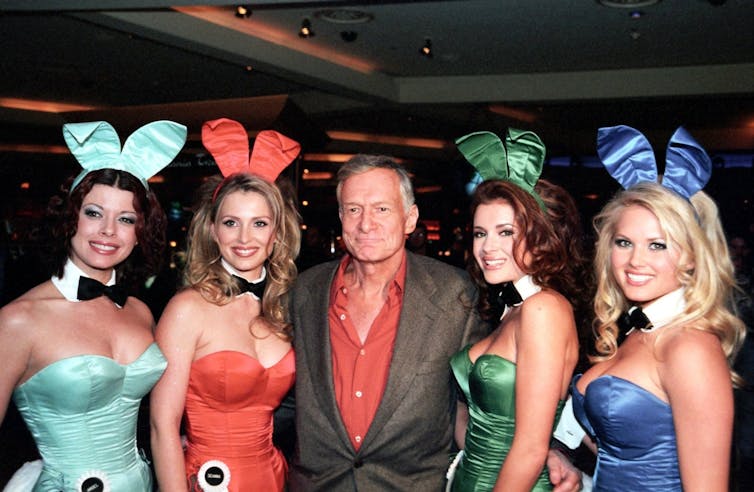
Hugh Hefner in 2001with Playboy ‘bunnies’. EPA/Glenn Pinkerton/LVNB
The passing of Playboy founder Hugh Hefner prompted both positive and negative eulogising. From one perspective, he was a revolutionary who helped to dismantle the long-standing secrecy and shame surrounding sexuality. And from another, he simply popularised the objectification of women for the gratification of men.

The most surprising detail to emerge after Hefner’s death was that Brooke Shields had featured in a Playboy publication called Sugar and Spice when aged only 10 years old in 1975. Photographer Gary Grosse received $450 to take the photographs of the heavily made-up Shields posing naked in a bathtub. The Sugar and Spice series of books in which the images appeared promised “surprising and sensuous images of women” from contemporary photographers, coding them as “artistic”.

The ongoing controversy about the images, particularly once Shields was old enough to realise that she did not want them in the public domain, affected Grosse’s career as a fashion photographer and he eventually became a dog trainer. Yet the fallout from the exploitative images did not significantly tarnish the Playboy name or Hugh Hefner. Shields featured on the cover of Playboy in 1986 at age 21.

Today in the United States it is a felony in most jurisdictions to publish a nude photograph of a model aged under 18. However, laws about publishing images of minors were not as definitive historically and internationally, particularly if a model’s parent gave consent.

As the internet has become ubiquitous, we have become much more aware of the existence of child pornography and of the paedophiles who seek it out. Viewing and trading sexual images of children is not only a criminal act, but one of the most widely reviled behaviours possible. But pornography and popular culture have often exploited the line between girls and woman with the fetishisation of girls or women who look young.

Pornographic magazines and video have often used the trope of “barely legal” to present young women who are dressed and styled like schoolgirls, often in suburban bedrooms or school settings. As US historian Hanne Blank wrote in 2008, the depiction of “cheerleaders, students, babysitters and sorority girls” in this type of porn means that “the immaturity symbolism is insistent”.

While clearly most people are at the peak of their physical attractiveness in their youth, the fetishisation of young boys for a heterosexual female audience is nowhere near as common as the obsession with young girls within culture aimed at older men.

One obvious reason for this difference is the historic value that has been placed on female virginity in a way that it is not for men. This includes older ideas about the importance of a virginal bride for ensuring that all of her children were legitimate, to more recent notions of women with sexual experience being “sluts” or dirty.

Today the vast majority of people in countries such as the United States and Australia have sex prior to marriage. This could be one reason why girls continue to be sexually fetishised, as they symbolise an innocence and purity that most young women are no longer seen to represent.

While some community groups contend that sexualised images of girls might support the behaviours and actions of paedophiles, there is a more pervasive issue at stake here for all women. One of the legacies of Hefner’s Playboy empire and the sex culture it helped to propagate is that only very young women are sexually attractive. The oldest “Playmate” (the women who feature in the magazine’s centrefold) to have ever appeared in Playboy was 35. Few women aged in their 30s were ever featured.

Conversely, at least nine minors, aged 16 and 17 at the time of photographing, have featured in American and international editions of Playboy. In 1958 Hefner was brought before a court after publishing images of 16-year-old Elizabeth Ann Roberts in a feature entitled “Schoolmate Playmate”. Roberts was described as a “bouncy teenager” occupied by “reading and writing and ’rithmetic”, but she looks physically tiny and vulnerable in the images. The charges were ultimately dropped as Roberts’ mother had consented to the shoot.

While they are not generally focused on depicting naked bodies, women’s magazines regularly name men aged in their 40s and 50s, such as Johnny Depp and George Clooney, as among the most sexually desirable men. One of the legacies of Playboy is its contribution to the fetishisation of young women and a porn culture that toys with the depiction of women who are styled to look as if they are school-aged or just over the most minimal line of cultural acceptability (barely legal).

The ConversationThe images of Brooke Shields published in Playboy’s Sugar and Spice series have been widely circulated in the wake of Hefner’s death as an example of why he should not be celebrated. People are certainly right to be alarmed by images that figure a 10-year-old as an object of sexual desire. However, it is important to see the images of Shields as simply the most egregious example of the way that magazines such as Playboy have contributed to a culture that fetishises girls.

This article was originally published on The Conversation. 

Tuesday, March 31, 2015

Talking Princess Culture on Life Matters, Radio National

To coincide with the release of Disney's new Cinderella film, I was a guest on Radio National's 'Life Matters' last Friday. I joined host Natasha Mitchell in a talkback session on the subject of girls and princess culture, along with Samantha Turnbull, author of the Anti-Princess Club series of books and children's author and school principal John Marsden.

Listen in to the podcast for a variety of perspectives on what wanting to be a princess means, not only for girls, but for boys too.

Thursday, October 31, 2013

Boo! What's So Scary About Halloween Costumes

The following article was published at The Conversation on 31 October 2013.

As October inevitably draws grizzling about the premature appearance of mince pies and puddings on supermarket shelves, so too does it prompt laments about American cultural imperialism and consumerism.

Halloween is now a fixture in the Australian calendar. Spooky decorations and themed confectionery are a familiar sight in shopping centres and around 100,000 Halloween pumpkins are grown out of season for carving into Jack-o-Lanterns.

Halloween has its origins in the Gaelic festival of Samhain, which coincided with the end of the harvest season and heralded the beginning of winter. While there are many Celtic and European traditions that precede Halloween’s commercialisation in the United States—try carving a face into turnip instead of a pumpkin, as is believed to have been the practice in Ireland— its adoption in Australia has largely followed American customs absorbed from film and television.

Groups of Australian children circulate suburban streets in costume on Daylight-Savings-lit Halloween evenings “trick-or-treating”. Their quest for sweets prompted a 30 per cent increase in confectionery sales in 2012, according to a study of Halloween’s contribution to child obesity published in the Medical Journal of Australia.

Adults from Generation Y, and to a lesser extent X, are also embracing Halloween more warmly than their parents. Halloween parties and nightclub events are common.

With the growing celebration of Halloween by children and younger adults, the practice of wearing costumes has followed. If you hear knocking at your door on Halloween, you’re most likely to encounter pint-sized witches, vampires and  ghosts (the last-minute sheet with eye holes cut out).

However, in North America, and  also among the growing number of Australian adults who participate in Halloween, costumes are not necessarily tied to supernatural or “scary” characters. Costumes are just as likely to mimic iconic film and television characters, celebrities, and politicians. For instance, the most searched-for costumes this year include Miley Cyrus, Minion from Despicable Me 2, Walter White of Breaking Bad and musicians Daft Punk.

For young women, “sexy” costumes comprise a sizeable proportion of the commercially made designs available in a way that is not replicated in similarly themed costumes marketed to men.

There are “sexy” women’s versions of common costumes, including animals, pirates, devils, fairy tale characters, and military personnel. But there are also extremely objectifying women’s costumes, such as the “sexy slice of pizza”,  “sexy bucket of hot fries” and dozens of other combinations of “sexy” with types of food. By way of comparison, a male slice of pizza costume is decidedly unsexy.

There is an entire branch of racially problematic sexy costuming, notably of “geishas”, Native American, Inuit and Middle Eastern women.  The racist stereotyping across costumes for both men and women has been cleverly countered by the “We’re a Culture Not a Costume” campaign originating from students at Ohio University.

Costumes have the potential to permit  the permit the wearer to subvert ordinary social expectations. Nancy Deihl, a scholar of costume studies, points out that “Any time you’re allowed to wear a costume, you’re also allowed to engage in activities outside your normal behaviour.”

Historically, as Valerie Steele observes, women’s sexy costuming at masquerade balls from the eighteenth century onward transgressed conventional expectations of feminine propriety. Today, in the West, where girl and women are encouraged to prioritise sex appeal, sexy costumes do not readily permit the wearer to step outside the norm, but instead to remain firmly within it.

There is nothing wrong with the existence of sexy Halloween costumes for women, or with women wanting to be found attractive. (Even despite the fact that popular demands for men’s costumes rarely call for “sexiness”.)

What is problematic, however, is when the options available for women become so narrow that there is little choices to be anything else. The changing nature of girls’ Halloween costumes shows the requirement to be sexy is now transforming how girls dress up too.

In past decades, girls’ costumes were designed to recreate a particular thing or being, such as a pumpkin, cat, clown or devil. The emphasis in these same themes in modern girls’ costumes is on short dresses, stockings and even thigh-high boots that are then accessorised to faintly resemble a pumpkin, cat, clown or devil. The word “naughty” recently slipped across from the plethora of “naughty” women’s costumes to a Walmart “Naughty Leopard” costume intended for toddlers.

As Halloween gradually weaves itself into Australian culture, commercially made costumes are also finding their way on to our shop shelves. While cultural differences mean that we’re not likely to see the racism of “sexy squaw” costumes or a local equivalent gain acceptance, it is hard to imagine that the overwhelming trend of sexy women’s costumes won’t also be imported, along with the inedible pumpkins.
 

Friday, September 7, 2012

Lunchbox/Soapbox Talk: From Prim to Pole Dance (4 October)


I'll be speaking at the Wheeler Centre, at the State Library of Victoria, on Thursday 4 October in the Lunchbox/Soapbox series. The program for the rest of the year includes Clementine Ford and Catherine Deveny. My talk is entitled "From Prim to Pole Dance: Girls, Sex and Popular Culture." I'm attempting to inject a bit of historical context into recent media discussion about the "sexualisation" of girls. So let's see what happens when we juxtapose the Girl's Own Paper with A Current Affair exposés about girls out on the prowl in skimpy dresses.

Wednesday, July 6, 2011

WWII Motorbike Daredevils


British Pathé has an amazing collection of film footage from the 1890s onward online and available to view free of charge. There is not much present from before the turn of the century, which is both logical and sad, yet there is a real treasure trove of newsreel footage that brings the period to life in a way that printed sources can't quite achieve. The clip above from 1944 shows girls training for the National Fire Service as despatch riders. Of course, they're not usurping male roles because it's war time, and they're still feminine because they don't neglect the styling of their hair.

Friday, January 7, 2011

Talk about Sexualised! Old Love's Baby Soft Advertisement

I have no idea of the original magazine source for this ad, which appears to be from the late 1970s or early 1980s, as I discovered it during a procrastinatory exercise that rambled through photo collections of strange animals and bad celebrity plastic surgery. This was among a collection of "weird old ads".

Given the recent reports about a beautiful artistic photograph of a young boy depicted as a peacock being considered inappropriate for sale in a charity auction conducted by the Sydney Children's Hospital Foundation, it is hard to believe that an ad such as this one for Love's Baby Soft ever made it to print with its explicit connection of childhood with sexiness. Then again, we didn't have little girls in extreme beauty pageants in all their spray-tanned, be-wigged and sequinned glory at this point I'm guessing.

Sunday, October 24, 2010

The Mad Hatter, The Goblin King and Mr Tumnus: Girls Desiring Men


After a return journey from hell, I'm now back from Canada and the girls' texts and cultures symposium in Winnipeg. As someone who studies inanimate texts that do not speak back, it was a real revelation to hear researchers who work with actual girls speaking.

One paper ended with a video edit of The Lion, the Witch and the Wardrobe with a love song spliced over the top to suggest a kind of love plot between Lucy and Mr Tumnus. Immediately, I was reminded of the relationship between Johnny Depp's Mad Hatter and Alice in the recent Tim Burton film adaptation of Alice in Wonderland. While the film made a connection between the Hatter and Alice's deceased father through their mutual fascination with things outside the "normal" range of thought, the tension generated when Alice must decide whether to remain in Underland or return home seems much greater than that of a girl who must leave a friend behind. On the part of both the Hatter and Alice, there seemed to be a romantic interest that made the decision all the more poignant.

On the long flight from Vancouver to Sydney, the paucity of movie choices gave me the opportunity to find another filmic girl who is placed within a romantic relationship with a man. In the 80s classic Labyrinth (directed by Jim Henson), the fifteen-year-old heroine Sarah must rescue her baby brother from the goblin king, Jareth, who is disturbingly played by David Bowie, replete with backcombed hair and a codpiece. She must do this before the thirteenth hour or her brother will become a goblin, and she'll presumably be struck from babysitting club membership across the nation. As part of Jareth's attempts to prevent Sarah from reaching his castle by way of the labyrinth and rescuing her brother, he enters her hallucination of a masquerade ball (though both are unmasked). Sarah suddenly looks a lot older than she has throughout the film, with her hair elegantly styled and a face full of make-up. Jareth attempts to prevent Sarah from moving forward in her quest by dancing with her, and the scene again seems to show a girl desiring a man, or at least the idea of one, as she is temporarily transfixed by the spell of the ball and Jareth.

I'm not sure whether there are other examples, and the Lucy/Mr Tumnus one is a stretch (although I did feel a little uneasy with Mr Tumnus on first viewing the film as he seemed lecherous to me!), but with all the paranoia about paedophilia in contemporary culture it seems interesting to see at least a few very popular films that acknowledge the possibility of a girl desiring someone who is an inappropriate love interest. Perhaps it is a part of the demonstration of the girls acquiring maturity that they are shown as having the capacity for romantic interest in men, and the quick return to the normal world outside of fantasy lands leaves any conflict between social norms and the girls' feelings behind? I suppose it is an awkward reality that girls often experience sexual desires before boys their own age have matured and hence desires are projected on to much older pop culture idols, in what is usually only ever a fantasised relationship. Perhaps that's why these girl/man tensions turn up in fantasy films, as they'd be too awkward to contemplate in realist ones.

Tuesday, July 20, 2010

Winnipeg here I come! Girls, Texts, Cultures Symposium

I have become used to "girls" being a fringe, underappreciated realm of study. I almost have responses ready when people ask "so, you teach children?" (like the airport security attendant who was rubbing my clothing and bag down for traces of explosives a fortnight ago), and I've accepted that prestigious universities will take the candidate with the publication on Henry James informed by the philosophy of Agamben rather than girls' genre fiction.

Given this acceptance, I didn't expect to be invited to a symposium at a university on the other side of the world in order to speak and listen to other scholars on the subject. I've generously been invited by Professor Clare Bradford, who is the current recipient of a prestigious Trudeau Fellowship, to attend the 'Girls, Texts, Cultures' symposium at the University of Winnipeg in October. A quick Wikipedia check (only for initial checking, not for actual "research", students) revealed I'd be heading to the coldest city in the world with a population above 600,000. So perhaps it's warmer than Siberia, then.

I know I'll be joining Dr Kristine Moruzi, who has just taken up a postdoctoral fellowship at the University of Alberta (hooray!), Professor Mavis Reimer (from the University of Winnipeg) and a range of other international scholars from gender studies, education, psychology, sociology and international development.

I've put in an abstract to speak about British books and magazine stories about Australian girls. I have a list of a dozen or so such books written by British authors to confront at the State Library. But where will I find the time for that as Lindsay Lohan has just entered jail and I must maintain a candlit vigil by the television in order to await news of her potential early release.

Monday, April 13, 2009

"Up-Ageing" Girls Ditch their Dolls

For a start, I feel old because I did not know there even was a "Generation Z" until I read the newspaper today. I'm also supposed to feel old because an article in it describes the way that women of my generation packed their dolls away aged about 10 or 11, while girls are now tiring of brushing knots out of polyester hair at an average age of 6 or 7. The study cited in the article suggests girls are moving on to technological play a lot earlier, preferring to spend their leisure time on gaming systems, iPods and PCs.

The researcher, Mark McCrindle, argues that "they're [girls] moving into a technological world much earlier and it's partly coming from their peers … but it's also partly coming from parents who are pushing their children towards more structured educational toys," he said. This all sounds feasible, but why is this specifically problematic for girls? It is discussed here as a sign of childhood being "eroded" and as a follow-on effect of the premature sexualisation of girls.

Strangely it seems like it's a problem for girls to move on to gaming and electronic gadgets (even an iPod is mentioned, which hardly seems gendered in that surely boys and girls enjoy music). Did the study consider at what age boys are giving up action figures and cars? Might it not be that they are similarly developing a penchant for electronic goods at an early age? And perhaps if there has been a time-lag for girls up until now it has been part of the gendering of toys and computers. Would it have been sufficiently "girly" for an eight-year-old to be into gaming ten or twenty years ago? (Not to deny any exceptions, as I was particularly enamoured of my Commodore 64 in 1987.) How is the context different now when almost every Australian home has a computer (or two), internet, and a substantial majority have a gaming console as well?

Play with dolls fulfils a kind of preparatory function for mothering. Girls toys include ovens and irons because these are jobs it is imagined that they will one day perform. For boys we manufacture imitation power tools and lawnmowers because these tough jobs are male. Mums and Dads are probably not sticking to these gendered norms as represented in the toy aisle as firmly as in the past. Maybe girls ditch dolls earlier because they see Mum taking her laptop to work and want to emulate her in the same way that girls of previous generations wanted a replica kitchen to model Mum's daily routine?

And if dolls are waning in popularity then someone better tell the people behind the new Australian Girl doll. These dolls are meant to resemble their girl owners in age and are presented as thoroughly Australian in their netball uniforms and beachwear. The creator of the doll, Helen Schofield, was also motivated by the sexualisation of girls and wanted to counter "the negative impact of popular culture on young children". I'm interested to know whether a range of non-violent boys' toys are being developed at the moment to stem the negative impact of popular culture on them. Or is that less exciting than stemming the tide of pre-teen g-strings?

Sunday, December 7, 2008

Purity is Back...Alright

Purity is perhaps less welcome back today than even the Backstreet Boys. It is possibly as welcome as the return of New Kids on the Block. That said, NKOTB actually does have a new album out, inventively called The Block, and apparently thirtysomething women have been turning up to their concerts in screaming droves, reliving their teenage idolisation of the first superstar "boy band". But I digress.

Those au fait with contemporary children's literature will have heard of a little series called Twilight by Stephenie Meyer. I currently have the three or four Bible's worth of paper stacked at home awaiting some holiday reading, thanks to my lovely colleague Kris. Now the religious comparison there is not without reason. Today's Age is running a story about virginity being "back" in vogue, combining a few real-world examples of young people who will "save themselves" for marriage (sourced from the Church of Jesus Christ of Latter Day Saints) and invoking Meyer's vampire quartet of novels for girls as indicative of a turn back to purity after decades of sex obsession because of vampire Edward's refusal to have sex before marriage.

The article takes an intriguing turn when we hear from a "counsellor" who did not even kiss her husband prior to marriage: "Julieanne Laird, a counsellor with the Australian Fellowship of Evangelical Students at Melbourne University, waited until marriage before having sex. To avoid temptation, she and her husband didn't even kiss until they were engaged; pledging not to kiss or even to dance with a man other than one's father or brother is not uncommon among the more devout pledgers." Wait a minute. We hear from an eighteen-year-old man who pledges to save himself for marriage in this article, but is there any obligation on males not to even dance with another woman other than his mother or sister?

While I'm certain that Twilight and a small number of religious groups exhibiting conservative tendencies with regard to girls' sexuality are not indicative of a radical societal shift toward abstinence, both of these examples seem to allocate males with a responsibility for controlling girls' developing sexuality, even through relatively benign milestones such as school dances.

Now I gave this post a silly title because I was thinking of a Backstreet Boys' song, but I now realise I can relate these things, as boy bands show the need for girls to gradually channel their emerging sexual feelings somewhere. Even if it is by putting it into plastering their walls with posters of men pretending to be boys. To place "promise rings" on the fingers of young girls before they've even had a chance to work through the confusing trauma of teenage desire seems a recipe for certain divorce when "the one" just doesn't live up to the marketing.

Friday, November 21, 2008

Protecting their Virginity: Saving Girls from Sex


Bad Blogger! What more need be said.

I have, however, been buying a phenomenal amount of Girl Guide and Girl Scout memorabilia via eBay. I have a Girl Scout holy card, complete with Mary showing the girls the way, an original Girl Guide belt (complete with many dangly attachments for hooking useful objects on to), '50s Americana calendars, magazines, a Finnish Girl Guide book of games, and even an old Brownie felt hat with a stencilled-on pixie. It's been amazing to discover the collectable side of the movement. I bought a gigantic book of around 500 pages related to collecting Girl Scout memorabilia. I had to stop myself with the Girl Scout doll collecting book. There is such a thing as too tangential.

Now, prompting the first post back after an unjustified absence is the new Australian federal government television campaign to prevent binge drinking. I'm not sure why the subject of drinking and girls continues to provoke me. The start of it would perhaps be the differing treatment of genders in this regard.

The new ads, one of which can be seen here , rightfully remind young people not to plunge themselves through glass coffee tables after one too many Breezers, end up in brawls or run the risk of injury near the roads as pedestrians. The focus for boys is avoiding fights and physically dangerous situations such as being struck by a car. The suggested danger for girls, however, lies in the likelihood of having sexual intercourse that might later be "regretted". An image shown in the clip with the ambulance officer voiceover depicts a couple being photographed post- an intimate act in the shubbery. The gent in this scene is hastily zipping up his fly, while the girl, whom he is leaning over, is wearing a very short skirt, and is hunched over with her arms folded as if protecting herself.

The text from the newspaper article about the ads reads: "A teenage girl gets drunk and has sex, regretting it immediately. A teenage boy sneaks booze from his parents and is killed after stumbling on to a road while drunk." The wording implies that boys are active. The boy "sneaks" the booze from his parents. The girl "gets" drunk in the same passive way one might "get" the flu.

Could we imagine reversed scenarios? Would an advertisement ever warn a boy that he may regret drunken sex? While of course there are reasons for girls and women to remain aware of their surroundings and safety when drinking, these ads still seem to suggest that the greatest threat to girls is the loss of their virginity, while for boys it is a grand achievement, or at least something that could never be emotionally scarring. For a girl, it must be "special" or she will regret it "immediately". Why doesn't it have to be "special" for boys too?

Wednesday, September 17, 2008

"Heelarious" High Heels for Baby Girls

"Your little one will look fabulous in these soft crib shoes designed to look like high heels! "

Do we laugh or cry at this new range of baby shoes designed to imitate adult high heels? Of course, it's made clear on the designers' website that the "shoes", brand named "Heelarious", are effectively soft booties that cannot be walked on. Which is a relief because I'm not sure childcare centres have Imelda Marcos shelving available for filing all these heels away at nap-time.

The shoes do come with a disclaimer, though: "WARNING: May cause extreme smiling and hysterical laughter when in use." Needless to say there has been necessary outrage (and here) about whether these "heelarious" shoes are perhaps not as innocently amusing as their creators make out. The shoes come in a range of colours: black, hot-pink or animal print. The look being sought with this choice of colours and patterns is clearly a sexualised, adult one, which is then being promoted as a source of humour. Why anyone would care to make their own baby girl the subject of this "joke" is beyond me. Worst of all, the shoes appear to actually be selling well, with the website taking wholesale orders and a gigantic list of stockists. And can we even imagine what the creators will conjure up when they say they are planning a product for boys?

I wonder if boys will derive as much benefit from their product as girls purportedly will do. A reporter on the US Today show felt there was a career move to be had by wearing the baby heels: "Little girls can get a jump start on their strut and be top-models-in-training before they leave the crib.” Let's hope there was some tongue planted in that cheek.

Monday, August 25, 2008

Book review: What's Happening to Our Girls?

Maggie Hamilton, What’s Happening to Our Girls? Camberwell, Vic., Penguin, 2008.

Maggie Hamilton’s recent book promises to explain why girls today are developing “too soon”. The ostensible answer is that they are being sexualised and inducted into consumer culture from the moment that they can focus their eyes on their first Barbie doll. One thing Hamilton fails to explain is how this process differs from the way in which popular media and ubiquitous technology impact upon boys. Most frustratingly, her book has no semblance of historical perspective. We are told that these changes have happened “in a few short years”. How, then, are we to explain the dramatic difference between today’s girls and girls of prior generations? Or perhaps we could ask ourselves what was life like for girls in the past who married and had children in their teens as the norm or who were sent to work in factories prior to puberty? When Hamilton asserts that girls “are being forced to grow up faster than ever before”, “ever before” seems to discount any period in culture prior to fifty years ago.

There are a number of specific gripes I had about the book that mostly related to a lack of analysis of research material. Hamilton notes that marketing for Barbies used to be aimed at girls aged 6 to 8 but that they are now “purchased for toddlers up”. This is a purely anecdotal example, but my friends and I had Barbie dolls prior to school-age in the 1980s. It does not seem particularly unusual for Barbie dolls to be bought for pre-school girls in comparison with previous decades. Hamilton also glosses over Barbie’s origins as what she terms “a sexy German cartoon figure” (16). Yet she attributes major significance to Bratz dolls, who are deemed to wear raunchy clothing and whorish make-up, in the sexualisation of girls. A serious consideration of the role of dolls in sexualising young girls would need to take greater account of the Bild Lilli doll (the inspiration for Barbie) and its origins as a sexy doll marketed (and priced) for adult consumption. The comment included from a kindergarten teacher that observed that girls “no longer play mother” because Bratz dolls have transformed play to include girls “becoming” the doll ignores a long history of girls playing with fashion dolls (of which Barbie is a long-produced exemplar). Juliette Peers' study of the history of the doll would have been an illuminating place for Hamilton to see how the fashion doll changed play with “baby” dolls more than a century ago.

As a non-academic study, perhaps this lack of critical analysis can be forgiven, but a number of unconsidered statements cannot. On the subject of violence among girls, Hamilton argues that “[f]or at-risk girls, the kinds of heroines found in such movies at Charlie’s Angels and Million Dollar Baby are like role models.” The heroine of Million Dollar Baby (played by Hilary Swank) becomes crippled because of her determination to participate in the male-dominated sport of boxing. Her trainer turns off her life-support system to spare her a lifetime of staring at the ceiling, as she tragically can no longer move or speak. It is hard to imagine how anyone could feel that this film might promote violence among at-risk girls. The simple representation of a girl participating in a violent sport does not necessarily glorify it.

The worst of these offences, however, relates to Hamilton’s discussion of “rainbow parties” in which girls supposedly perform oral sex on boys at parties while wearing different shades of lipstick. Boys purportedly obtained a "rainbow" of lipstick colours on their penises after these free-loving parties. A quick Google search would have reminded Hamilton that information found online should not be taken as fact without some further investigation. The rainbow party seems to be little more than a moral panic or urban legend and should not be listed as symptomatic of contemporary girls' sexual degradation.

Nevertheless, there are some positive aspects to Hamilton’s book. She draws attention to some worrying statistics including one study that suggest that 11 year-olds today score on average two to three years lower on cognitive tests than children fifteen years ago. She also wisely attributes some blame for shopping-obsessed girls to mothers themselves (amongst the hyperbole about five-year-olds with shopping addictions). The book also considers the suicides of Victorian teenagers Stephanie Gestler and Jodie Gater in 2007 with some degree of complexity. Rather than entirely blaming the emo subculture, Hamilton concedes that there were other factors involved in their decisions to end their lives. Nevertheless, there is still a simplistic suggestion that parents should learn about subcultures to “understand what their daughters may be battling with or trying to express”, as if subcultural involvement is a necessary indicator of suicidal or anti-social tendencies.

In sum, Hamilton's work is admirable for the amount of research time spent with girls and those who work with girls. What is lacking, unfortunately, is a critical eye for judging this material and for contrasting it with how girls have been positioned historically and even internationally. As the book's common refrain "local figures are hard to come by" indicates, Hamilton has sought out a grab-bag of worrying statistics sourced from different countries and pertaining to girls of various socio-economic groups. The picture we derive from this scattered information cannot be coherent with no framing context to show us how today's girls are socialised differently to boys or how a Bratz loving, Britney-woshipping tween is different to a girl of twenty or even a hundred years ago.

Wednesday, August 13, 2008

Girls Gone Tame at the Dolly Awards

The headline reads "Girls' Wild Night at Teen Awards". It is a Sydney Morning Herald story about the Dolly magazine Teen Choice Awards, which were held last night to honour the most popular entertainers for its teen girl readers. I am imagining a rampage. Fuelled by the caffeine of sponsor-provided Pepsi Light (watch your figures, girls!), the exclusively female audience invaded the stage, molested "Pin-up boy of the week" and girlhandled the fragile-looking one from The Veronicas.
When I see the words "wild" and "girl", I also can't help but think of the popular US phenomenon of "Girls Gone Wild" DVDs in which college girls on spring break flash their breasts at the camera and dabble in girl-on-girl erotica. Arrested Development parodied this aptly with its alternate series, Girls With Low Self-Esteem. 
Anyway, I am about to let you down severely here. This, according to the first line of the article, is what happened at the awards ceremony: "THE crowd screamed like teenage girls at the Dolly Teen Choice Awards last night, reserving some of their loudest cheers for a young actress with an impressive pedigree." The crowd --of teenage girls-- screamed like ... teenage girls. Let's leave the profundity of that statement aside. Is this necessarily "wild" behaviour? Girls have been screaming at events since The Beatles. Possibly they even did so for particularly attractive lute players in Medieval times. My goodness, if all a girl has to do be wild is "scream" and "cheer", what makes a "domesticated" girl? A silent one?

Tuesday, August 12, 2008

Olympic Girl Singer "Flawed" in Appearance

Today brings us the news of a Chinese Milli Vanilli scenario. "The girl in the red dress", Lin Miaoke, actually mimed the song “I Sing for My Motherland” at the Beijing Olympics opening ceremony to a recording of the voice of another girl, Yang Peiyi. If we revisit our repressed memories of the spandex-panted Milli Vanilli, the group was comprised of two fit, attractive young men who lacked abilities in the vocal department but were the media front for significantly less-marketable (yet talented) R&B singers.

The difference in this instance is that there was no commercial imperative to relegate the authentic singer to the background of the event. While not “right”, it was understandable that pop music sold to teenagers had to come in an attractive package that could be featured in magazines, included on fold-out posters and salivated over in video clips. Now we are witness to a scenario where it is in the “national interest” for the child performer of a song to be perfectly attractive.

If China could have found its own Nicky Webster, who was considered to have the right combination of voice and appearance for the Sydney opening ceremony, we’d not be commenting on the need for beauty to accompany talent in another area. We could also think of other examples relating to the Olympics to confirm that this is not a peculiarity of Chinese attitudes toward girls and women. Remember the Australian swimmer Petria Thomas and how her endorsements paled in comparison with “more attractive” athletes such as Susie O’Neill, who was admittedly more successful when they were competitors, and Samantha Riley.

The specifics of the choice of the “right” girl in Beijing make some telling points about how we think of girls. Reports suggest that initially a ten-year-old girl had been chosen to perform the song. She was ditched for being “too old”. Yet at seven, our real singer, Yang was evidently too young. One of the key reasons she was not deemed attractive enough to sing in person was because of her “uneven” teeth. Most children go through the same process whereby their baby teeth fall out and adult teeth grow through at an uneven rate until they settle several years later. China did not want a “cute” child with endearing uneven pearly whites, but a child who had the features almost of a woman (in terms of adult teeth), but was still supremely youthful in appearance. Like girlish porridge, ten was too old, seven too young, but nine was just right. 

The girl chosen for her appearance also necessarily had feminine long hair in comparison with Yang’s shorter but practical (and cute) bob. Lin also seems to have more of a wide-eyed look which may not only be about a marker of innocence but privileging of a slightly western visual aesthetic.

Intriguingly, we’ve not had a boy fulfil the role of singer and representative of national identity at an Olympic opening ceremony in recent times from what I can recall (although a boy springs to mind for the Melbourne Commonwealth Games in 2006). Would we value a boy for the qualities of his voice alone? Is it only girls who must look good while they excel at singing and swimming?

While there is some suggestion that Lin did not know it was not her own voice on the recording that was played at the ceremony (both girls purportedly sound "similar", but not similar enough it seems), her media comments about the event are telling. She was delighted with the performance because "I felt so beautiful in my red dress". Like consumers who demand perfect red, shiny apples that turn out to have little flavour, we seem to be applying visual standards over substance in how we think of girls too.

Monday, August 11, 2008

Fairy and Princess Indulgence: When Wishes Shouldn't Come True


Monica Dux, a fine former Melbourne Uni-ite, has written a piece in today's Age about the madness that is the pre-school girl obsession with fairies and princesses. Called "Girls Can't Thrive in a Puff of Pink" she muses on why fairy princesses abound at every pre-school turn. As she points out, there's certainly nothing wrong with young girls who genuinely covet pink frippery breaking it out for special occasions or dress-ups, but why do we see so many fairy princesses tagging along for the weekly grocery shop? It's not like the lone boy who insisted on going along to Safeway in his Spiderman pyjamas, there are fairy-ballerina-princesses, complete with wands, at every suburban Westfield Shoppingtown at this moment.

As the poor baby above, weighed down by an oversized crown that she doesn't seem to particularly want there, suggests, this trend perhaps is a reflection of parental attitudes to femininity rather than the children themselves. If girls do begin to desire wings and tiaras, it seems that it is often because we have told them that they should. This is not a new cultural effect, as we've been through the "why are girls given toy ironing boards and kitchenettes while boys get power tools and earthmovers" discussion many times before. I wonder if the fairy and princess obsession is borne out of parental consideration of their child as unique. There is a well-known tendency in children's literature for child protagonists to discover that they are "special". A heroine (or hero)'s uninteresting regulation parents prove not to be her own and the story reveals that she actually has royal lineage or a special magical quality. Just think of Harry Potter discovering that he is really a wizard and can escape (at least for most of the year) dull (and abusive) suburban life with the Dursleys.

Many children have the fantasy that they are just biding time with an ordinary Mum and Dad before their supernatural or magical parents make themselves known. Are the parents of these little princesses and fairies enacting a slightly different form of this typically childhood fantasy? One in which their daughter is actually a princess. A real princess can't be displayed in public in a tracksuit, but must be shown off in a highly feminine, impractical-for-toddlers outfit.

I visited Disneyland Paris last month and was surprised to see so many little girls making their visit to the park dressed in Disney Princess dress-up gowns. Perhaps it was one occasion where a little indulgence would not be inappropriate but I wonder how far the fantasy is indulged and for whose benefit. I can hear the mums of my mother's generation saying "don't be ridiculous" if their girls demanded to go to the shops in a fairy costume. I can't help but thinking it's parenting style rather than girls themselves that are primarily responsible for fairy rings sprouting across suburbia.

As a footnote, the child in the top-right photo is part of a kind of anti-princess photoshoot.

Saturday, August 2, 2008

What's Happening to Our Girls? Same as Always?

I promise to be a good blogger. After three weeks overseas, I am returning to regular posting. I have been buried in Girl Guide books for the past week, but set out this evening to find something contemporary to discuss in my "first-post-back".

I must start out by saying that I find it problematic when people make judgements of books that they have not yet read. I am about to do something of the sort, but am aware it must be more of a comment on the way that this newly published book is being marketed. I will save the review of the substance of Maggie Hamilton's What's Happening to Our Girls for when the book arrives in my mailbox.

Hamilton conducted two years of interviews with teachers, medical professionals and girls themselves in order to "get an insider's view on what girls are experiencing at present, from birth to the teenage years." Professor Ghassan Hage, at a university seminar a month ago, spoke about undertaking years of research, publishing his conclusions in the newspaper and the resultant frustration of someone who has thought about the topic for five minutes saying simply "I disagree". I don't wish to deny the work Hamilton has done here, nor that her research was rather extensive and may support her conclusions. However, some of the promotional information for this book seems to draw on long-held beliefs about controlling the behaviour of women, rather than reflecting any startling new trend. While there are undeniably issues of concern to do with the commercialisation of childhood, the prevalence of eating disorders and sexual abuse, I cannot agree with the statement that "in a few short years our girls have become vulnerable."

The first question posed on the Penguin publishing website for the book asks "Why are girls as young as five years old concerned about their looks and addicted to shopping?" Is this statement projecting some naive version of childhood on today's young girls? From the point at which we can recognise what is considered attractive in our culture, we begin to compare ourselves to others.

As a five-year-old, I knew that my short brown hair was not subject to the same admiration as the long, swinging ponytail of a light-blonde classmate. Why did I feel the need to wear my best dress (bought for a ball) to the opening of a "house" my grade one class had built out of egg cartons? The suggestion in this statement that very young girls have only just begun to be aware of their outward appearance and how it compares to that of others seems to nostalgically recall that girlhood was once a period of innocent, carefree days (untainted by the gendering affects of our culture) climbing trees and collecting tadpoles. The very first magazines for girls published in the UK in the 1880s project a strong concern with maintaining the attractiveness of the body and fashion.

And I must ask if it is even possible for a five-year-old with no income and mode of transportation to have a shopping "addiction". Perhaps a vain parent who wishes to treat their child as an extension of their designer identity, but an "addiction" seems a strong term to use. Incessant nagging does not an addiction make.

The next question the book seeks to answer concerns the twin evils of sex and alcohol: "Why are they having sex and binge-drinking so young, responding to chat-room predators, and bullying their peers via email and text messages?" I must read the book to discover what "so young" translates as. The overall cast of this sentence is that girls are victims more than ever before, and are persecuting one another to a greater extent.

Is teen sex a new phenomenon, or just one that is not as concealed as it once might have been? Can we compare the age at which girls were married in the past and look at the age at which sex is now deemed acceptable (rather than something to be concerned about) in light of changing historical perceptions? This statement is concerned about girls having sex at all. It's perhaps a well-worn point, but the political and media attention devoted to girls having sex and drinking alcohol as a tragedy, compared with the low-volume of comment on these issues as they relate to boys, reveals that when young people drink and have sex it is only considered problematic as it relates to girls. The mere act of girls drinking is troublesome. They don't even need to drive while smashed or get in a fist fight for it to be enough to enact a new law dissuading them from drinking sweet, fizzy alcoholic drinks.

The point about chat-room predators seems a little bizarre in that it seeks to find an answer for the actions of criminals in the behaviour of children. We may as well ask why children used to sometimes fall prey to men who offered them a bag of lollies if they got into their car. Are we blaming girls themselves for the adult creeps who lie to girls online for sexual gratification?

Finally, is an alteration in the media used for bullying indicative of a shocking increase in its prevalence among girls specifically? If email and text messages had been a method for victimising those at the bottom of the high school scrapheap in the past, would they would have been invoked with just as much hierarchical glee as embarassing notes on lockers, vicious rumours and practical jokes? And what about the use to which boys are putting their camera phones? Remember the girl who was sexually assaulted, urinated on and then subjected to a video of the incident being uploaded to YouTube?

One of the key claims of the promotional book blurb is that girls "are being forced to grow up faster than ever before." Faster than girls who once became wives before puberty? Faster than pre-teen girls who were compelled to work as soon as they were able to help support their families little more than a century ago (and still today outside the affluence of the West)? Faster than girls who grew up during World Wars and the Depression?

I'm pleased to see a study of how culture works to the detriment of girls being published by a major publishing house, and will read it keenly and post again afterward. The publicity for What's Happening to Our Girls? nevertheless presents a nostalgic view of girlhood in the past as devoid of sex, drugs and torment about appearing appropriately feminine.

Sunday, June 1, 2008

Controlling What Girls Drink

The past few weeks have seen two contrasting stories relating to girls drinking. First, was the story of the Olsen twins' coffee being "spiked" with full-cream milk by a Starbucks barista. (Barista: perhaps we could invite a similarly important-sounding term for sandwich hands, or has Subway already done that with its "sandwich artist".) Regardless of the truth of the story or not, it sat in the top five most-viewed articles on The Age website for almost a week. And "story" is perhaps being a little generous, as the article was comprised of about five sentences. One of which was a denial from the Olsen's publicist. A web search reveals dozens of sites that also picked up the story, including Madison magazine who were "inclined to believe that [the publicist's denial] judging by the twins' still-slim frames."

Which is more astonishing? That thousands of Australian readers considered the Olsen twins unknowing consumption of full-cream milk to be among the five most important stories of the week or that a magazine promoted the idea that if Mary-Kate and Ashley had been sipping on the odd bit of regular milk in their coffees that they'd now be migrating from Antarctica with all the other whales. At the heart of both responses is a cruel fascination with the weight of young women. Of course, it's certainly not up to cafe staff to be determining their customers' caloric intake, but in any event the story is most likely a fabrication. The flimsy premise itself doesn't matter quite so much as the strong interest in monitoring the twins' weight. If they were to start downing a few thickshakes, what would the next crop of stories be headlined?

The second issue is related to so-called "alcopops". Whether it's a watermelon flavoured Bacardi Breezer or a Midori Illusion in a bottle, the recent tax hike on pre-mixed spirits imposed by the Australian federal government seemingly has its basis in controlling the drinking of young girls. The clear intent of the tax was to discourage youth drinking, but the alcohol consumption of "teenage girls" was particularly flagged by Prime Minister Rudd. Statistics quoted suggested that 78% of girls prefer them to any other drink, but so too did 74% of boys. Nevermind that it is predominantly young men who are drink driving and bashing one another about when drunk, we must get these fizzy, alcoholic confections away from our girls. They've "gone wild". Yes, there was a newspaper article called "Girls Gone Wild" about the subject of alcohol in the past month. Strangely, it also chose to discuss criminality and the greater population of women in prisons today. This is not to say that youth binge-drinking is not a problem. Nevertheless, the reasoning behind this targeting of girls' drinking seems grounded in a double-standard that does not wish to see girls' losing their faculties and assaulting their bodies. Why aren't the same concerns directed at the drinking of boys? And then the outcry too over "blokes" suffering because the price of their Jim Beam and Coke tinnies also rose. So the drinking of young women is out of control and must be curbed by a tax hike, but we must spare a thought for men who'll now have to pay more. Why are men more legitimately entitled to drink alcohol without monitoring than women? Aren't the health implications the same for all (of course taking into account women's lesser tolerance for alcohol and pregnancy concerns)?

What girls, and girls only, do or do not drink should not be a topic of national and international discussion.

Saturday, May 24, 2008

Productless Girls are Pornographic


The controversy surrounding a photographic exhibition by an Australian artist has revealed a disturbing aspect of the way girls are regarded in contemporary culture. Bill Henson is renowned internationally for his photography, and is particularly known for his images of adolescent bodies. This is not the first time that he has exhibited work that features "children" unclothed. Yet this is the first time that the idea of obscenity charges have been raised and whipped the nation into a tut-tutting frenzy. It is also the first time that an Australian Prime Minister has seen fit to make judgement on where the line between art and pornography is drawn. Kevin Rudd did not simply suggest that we must tread carefully when exhibiting images of underage girls, but declared that the photographs in Henson's present--and now censored-- exhibition are "revolting".

Henson's current works are not new in their subject matter. What then has provoked this random outrage? Is it perhaps our own guilt at the overt sexualisation of girls projecting sex into every naked image we see? I heard discussion on talkback radio last week that called for footage of babies and toddlers scampering about on lambswool rugs in TV advertisements for nappies to be scrapped because paedophiles could find the content arousing. If every nude image of a child is viewed from within a context of paedophilic fear then we inadvertantly sexualise children ourselves. Of course the internet has allowed the worldwide trade of paedophilic images, to the horror of us all, but we adopt indiscriminate moral outrage and paranoia in return. This may be entirely understandable if it was not for the competing, accepted representation of highly sexualised girls and young women in men's magazines, pornography and advertising generally.

On the one hand, we can find dozens of DVDs and magazines in chain sexshops with titles like Barely Legal that play up the youth of the girls featured for the excitement of what we would define as "normal" heterosexual men, but when an artist features a non-sexualised naked girl in the context of an exhibition we culturally define it as paedophilic fodder. A girl bending over in a schoolgirl's uniform displaying her genitalia is an accepted, although X-rated, cultural norm. A naked girl's body when photographed for display in a gallery, however, is "un-Australian" according to Australia's opposition leader, Dr Brendan Nelson. Does a year or two difference in a girl's age really explain why sexy "barely legal" girls are ok, but a basic artistic nude is not? Perhaps we need to invest in some strategically-placed fig leaves?