
Showing posts with label masculinity. Show all posts

Friday, October 12, 2018

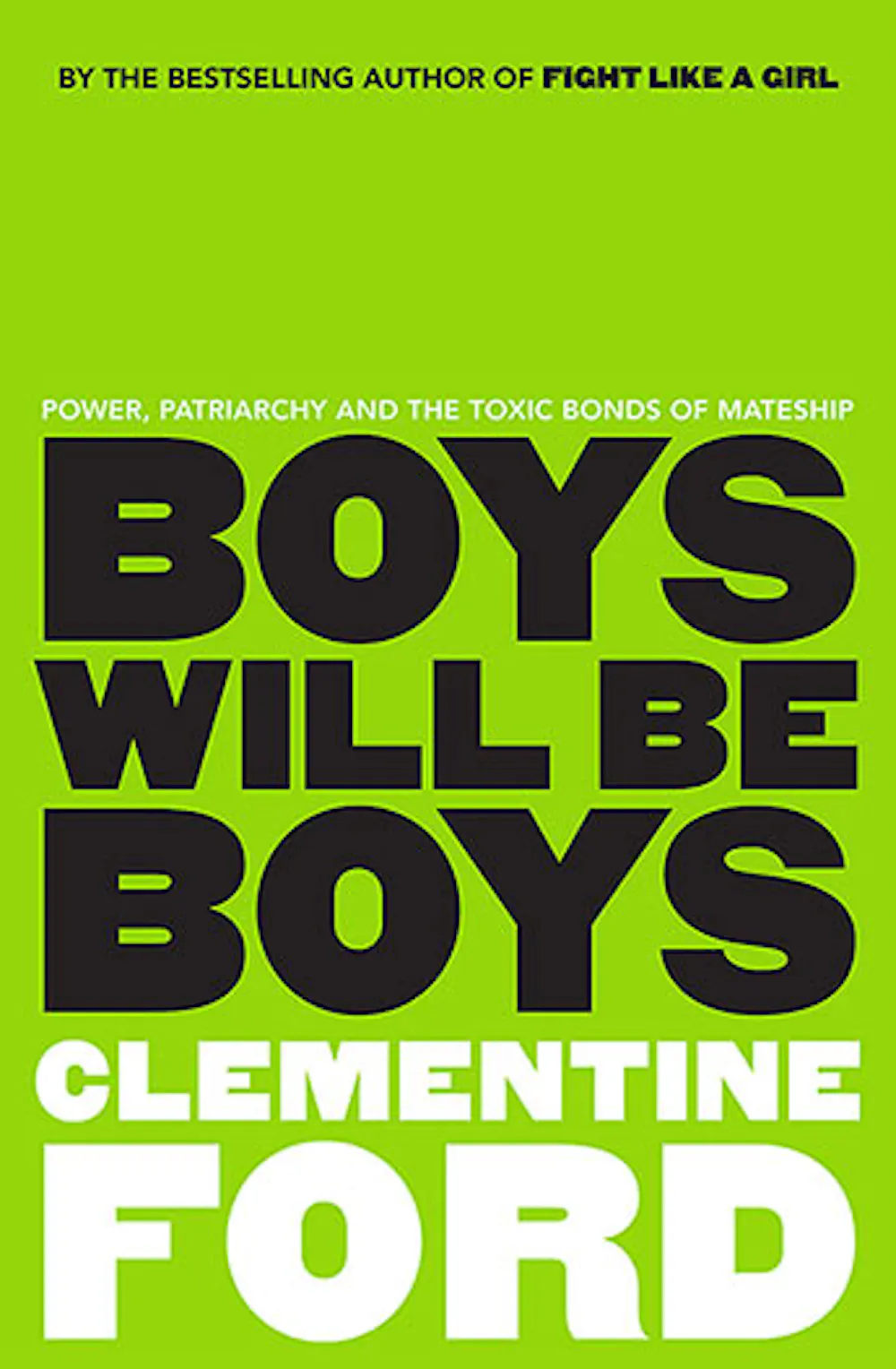
Clementine Ford reveals the fragility behind 'toxic masculinity' in Boys Will Be Boys


File 20180926 149973 1vft417.jpg?ixlib=rb 1.1
Shutterstock.com
In Boys Will Be Boys, Australia’s most prominent contemporary feminist, Clementine Ford, works toward dismantling the idea that feminism is harming men. Instead, she proposes — as feminists have consistently maintained — that a patriarchal society can be as harmful and destructive for individual men as it can be for women.

Ford considers how “toxic masculinity” is shaped from the moment of a boy’s “gender reveal” to her closing chapter, which – simply and powerfully — lists the names of more than 50 famous men who have been publicly accused of sexual assault and their alleged criminal acts.

She traces how gendered inequalities in the way we socialise children at home and via pop culture directly shape harmful adult behaviours. These include “the embrace of online abuse, rape culture, men’s rights baloney and even the freezing out of women from government and leadership”. Ford sets out to demonstrate not only how “toxic male spaces and behaviours … codify male power and dominance” but also how they serve to protect men from any consequences.

In a chapter on domestic labour, A Woman’s Place, Ford shows how gendered division of housework and childcare informs assumptions about adult roles. In a claim that will no doubt be quoted by many “Angry Internet Men” (as Ford refers to them), she proposes that heterosexual women are better placed living alone and inviting men “into our houses as guests occasionally”.

Her point is not that there is no pleasure to be had for a woman cohabiting with a man. Instead she highlights that managing “the gendered conditions of domestic labour … takes a fuckton of work”. This work happens regardless of whether women are consistently fighting for help with washing the dishes or changing nappies, or have begrudgingly accepted that the unending cycle of housework is their burden to shoulder.

Read more: Friday essay: talking, writing and fighting like girls

Short of raising a child in the wilderness, far from an internet connection, television signal or cinema complex, children are inducted into gender norms by the popular culture they consume. In her chapter about Girls of Film, Ford reflects on the experience of a 1980s childhood in which the blockbuster films for young people all required girl viewers to imagine themselves in the place of active male heroes.

Unlike girls, boys are not conditioned to identify with girls and women on screen. This, Ford argues, results in the marginalisation of stories about girls, which “are considered niche and peripheral, in the same way stories about people of colour or stories about disability or queerness are”.

We only have to look to the dramatic online overreaction to the news of a female-lead Ghostbusters reboot, which resulted in the stars of the film receiving sexist and racist abuse. This suggests that many men’s inability to see value in “stories about anything other than themselves” is entwined with the devaluation of women themselves.

Clementine Ford

Inevitably, Ford must consider the men who lead these online crusades against the imagined oppression of men. She devotes significant attention to Milo Yiannopoulos, who has become a figurehead of the men’s rights movement. When Leslie Jones, the African-American actress who starred in Ghostbusters, shared some of the abuse she received at the hands of Yiannopoulos and his followers, he accused her of “playing the victim”.

And yet, as Ford identifies, Yiannopoulos resorted to framing himself as a victim when his Twitter account was removed in 2016. In a telling assessment, Ford argues that these men are not united in their “iron-clad fortitude but by extreme fragility, and this is what bonds them together beneath men like Yiannopoulous”.

Read more: #MeToo is not enough: it has yet to shift the power imbalances that would bring about gender equality

One of the most frustrating modern retorts to any attempt to discuss gendered violence, discrimination and outright sexism is that “#NotAllMen” are responsible for these acts and attitudes. However, as Ford cuttingly observes, women do not need a directive to “look for the goodness in men, because we try our damnedest to find it every day”.

Women already know that not all men are guilty of the brutal sexual assaults, for instance, that Ford details in her interrogation of rape culture. The difference for women is that “we know that any man could be [a threat]”. The magnitude of living with such a gendered power imbalance impacts every woman’s thoughts and movements.

While Ford writes with great humour about the abuse she has received and anti-feminist rhetoric more generally, the overwhelming gravity of a world overcome by toxic masculinity permeates this book.

Margaret Atwood’s famous comment that men are afraid that women will laugh at them, while women are afraid that men will kill them, is no more painfully examined than in discussion of the brutal rape and murder of Aboriginal woman Lynette Daley. One of the killers, in his explanation of events to police, stated: “These things happen … girls will be girls, boys will be boys.”

As Ford rallies us to understand, being a boy need not pose a danger to women nor encompass the harms that patriarchy enacts on men, such as increased risk of suicide or the impact of violence.
With an epilogue comprised of a loving letter to her young son, Ford asks us to imagine a different definition of boyhood, in which being sensitive, soft, kind, gentle, respectful, accountable, expressive, loving and nurturing are no longer framed as incompatible with being a man.The Conversation

This article is republished from The Conversation under a Creative Commons license. Read the original article.

Thursday, September 28, 2017

UK crackdown on gender stereotypes in advertising shows up Australia's low bar

File 20170801 22136 rtzif

From next year, TV advertisements that play on gender stereotypes, or that mock people who fail to conform to them, will not be permitted by the UK’s Advertising Standards Authority.

The kinds of ads that have been flagged as inappropriate include those that depict men as incompetent at doing basic household or parenting chores, or that show a whole family leaving a giant mess for mum to clean up.

The authority has said ads that belittle people for not living up to gender norms – such as a KFC advertisement that implied a man suffering from anxiety was not masculine – have “costs for individuals, the economy and society”.

A UK KFC ad from 2014 suggests it’s not manly to listen to your
girlfriend.

Attempts to counter the prevalence of gender stereotyping in the popular media are popularly dismissed as “social engineering” designed to alter “natural” behaviours for each gender. However, the stereotypes we see represented in advertising are already ideologically motivated by centuries of gender inequality.

Gender is a social construct and we have the power to shape and revise what is considered masculine and feminine. And the media we consume – particularly advertising, which we see continuously – are particularly powerful in shaping what we think is “normal” and acceptable for men and women to do.
Think of the ubiquitous television ads in the 1980s for Tip Top bread, with their “good on ya Mum” slogan. The smiling mothers presenting sandwiches to their children conveyed that women are the default parents and that satisfaction for women should stem from caring for others.


Tip Top ad from 1983.

Australia has laws that apply to discriminatory advertising, including the Racial Discrimination Act and state and territory anti-discrimination acts. Apart from this, the industry is largely self-regulated. The Australian Association of National Advertisers has its own code of ethics.
The code forbids any advertisement that:
… discriminates against or vilifies a person or section of the community on account of race, ethnicity, nationality, gender, age, sexual preference, religion, disability, mental illness or political belief.
It also marks out “exploitative and degrading” sexual representations as unacceptable.

Australia has largely moved beyond acceptance of extremely objectifying advertisements for products with no inherent connection with sex. A prime example was the seductive “Chiko chick” who promoted the Chiko roll while posed on a motorbike from the 1950s.

However, self-regulated advertising criteria that merely forbid outright illegal discrimination or “degrading” sexual content set the bar especially low.

Other countries, such as Sweden and Spain, have made concerted efforts not only to avoid gender stereotyping in advertising but to counteract it. For instance, toy catalogues produced by Toys R Us and Toy Planet have drawn international attention for their depiction of both boys and girls playing with dolls, trucks and tools.

This kind of gender neutrality is not intended to discourage girls or boys from playing with the toys traditionally associated with their gender. Instead, it aims to make it acceptable for them to choose from any of the available options.

When you consider that debates about child-care costs are still usually framed in terms of whether it is financially worth women returning to work, it is clear the way we socialise children into seeing child care as women’s responsibility flows all the way through to major issues of employment and gender equality.

Gender stereotyping in advertising is not just problematic because of limiting representations of girls and women and the reassertion of their role in the home. In addition, the ways boys and men are depicted as useless at basic domestic tasks makes them out to be simpletons.

There are countless examples of “dumb dads” in ads. Think of the father in a Glade advertisement who is consistently befuddled by an automatic deodorising spray.

A banned Verizon ad from the US portrays the dad as being ‘stupid’.

Part of the strategy of advertisers in their representation of “dumb dads” may be to flatter mothers who do the majority of domestic work and grocery shopping.

However, these ads – which usually have a heteronormative orientation – also reinforce the status quo and culturally absolve men from responsibility to contribute to unpaid household labour, privileging their employment and recreation.

One way to consider advertising and other forms of popular culture is as a mirror that reflects our social norms, beliefs and values. If this is true, then advertising could be absolved of responsibility for reproducing gender stereotypes in that it is as progressive or regressive as the society in which it is produced.

Crucially, advertising and other media are not only reflectors of our culture. They also have the power to produce and influence values and norms.

The ConversationWith this in mind, the sooner we regulate advertising to encourage the depiction of a world we’d like to inhabit, the sooner it is likely to eventuate.

This article was originally published on The Conversation.

Wednesday, March 17, 2010

What a Tangled Web we Weave

I couldn't have asked for better inspiration to follow up my last post about the low status of girls' stories, than news about Disney's next animated feature, Tangled. The LA Times has reported on the film's title change from Rapunzel in order not to alienate boy viewers. The President of Disney and Pixar animation reportedly remarked, ""Some people might assume it's a fairy tale for girls when it's not. We make movies to be appreciated and loved by everybody." Of course, if a story is for or primarily about girls that rules out interest from boys, but stories about boys are seemingly "loved by everybody" regardless.

There are some changes to this filmic version that suggest a surface modernisation of the heroine. Much like Princess Fiona in Shrek, apparently "the demure princess is transformed into a feisty teen." Those who've given a few moments thought to analysing that film (well, at least students in a subject I teach at Deakin University have), find it easy to see the "feisty" heroine is still rendered subservient in needing to be rescued by her prince, by her natural role as the one who cooks and cares for others and her obsession with ensuring that she fits the standards of physical attraction required by her suitor.

It remains to be seen how Rapunzel fares as a heroine, but the hero "bandit" named Flynn Rider sounds like he will be injecting the right amount of masculine protection-and most importantly, action sequences- into the mix.

Scarily, this perception that "girls' stories" alienate boys is having an affect on which movies ever make it on to the screen. The complex Hans Christian Anderson story "The Snow Queen", which I loved as a child (and which includes both a strong girl and boy in its narrative), is reportedly now on the scrap heap because the studio has had "too many" girls' films in its schedule. So the simple presence of the word "queen" is too feminine? Or is it because it's about a girl who saves a boy? Would Beauty and the Beast be made today with its overt reference to a girl in the title and no action hero inserted to balance out the puffy dress quotient? Not that I'm a fan of the puffery, just irritated by the universalising of stereotypically masculine traits and the segregation of femininity.

Catmull believes that the recent Disney animated film The Princess and the Frog suffered at the box office because of its overt call to girls: "Based upon the response from fans and critics, we believe it [box office takings] would have been higher if it wasn't prejudged by its title". There are numerous other factors to consider here, including the film's use of traditional hand-drawn animation, which has clearly been struggling against CGI children's films in the past decade. On another front, The Princess and the Frog was the first to feature an African-American heroine. Already it had to challenge the perception that only girls watch girls' stories and, in addition, that white children are only interested in reading about or seeing white characters like themselves.

And so the box office takings of this film have a flow-on effect on the belief that stories about girls are only for girls, and stories about non-white characters are not for the white middle-class only serving to reinforce the homogenous norm even more rigidly than before.