Showing posts with label television. Show all posts

Monday, January 28, 2019

From The Getting of Wisdom to Heartbreak High: Australian school stories on screen


File 20190123 135136 1fnm1pl.jpg?ixlib=rb 1.1
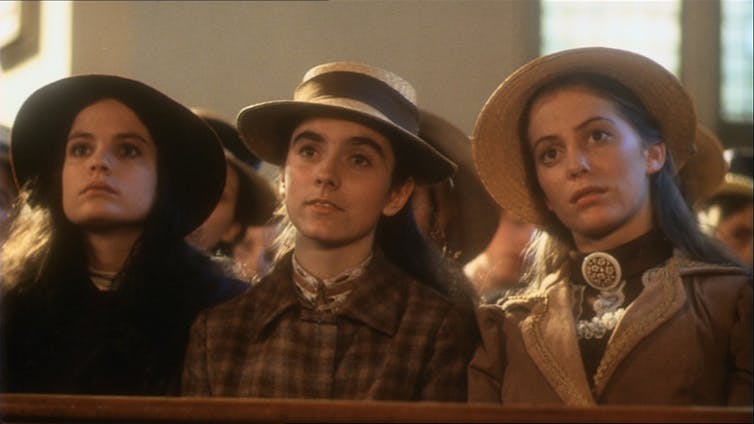
Bruce Beresford's 1977 film, The Getting of Wisdom
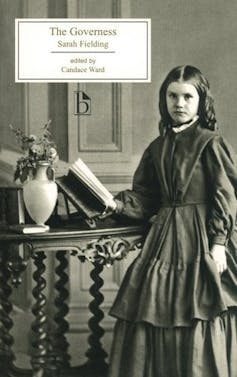
Going to school is one of the few life experiences almost everyone shares. From the time children began to be educated in small groups in Britain, there were school stories in popular culture, beginning with what many consider the first novel for children, Sarah Fielding’s The Governess; or, The Little Female Academy (1749).

The emphasis in early school stories was on moral and intellectual learning, which the reader was supposed to absorb. However, as school became a universal experience, stories about school elevated peer acceptance, sporting success, and friendships to the main sources of drama. This has remained true from the crucial cricket match of Tom Brown’s School Days (1857) to the quidditch tournaments of the Harry Potter series.

School stories appeal to children and adolescents because they represent a world comprised largely of other young people, with adult teachers relegated to the periphery. However, they also mark changes in the kinds of ideals and goals we want young people to aspire towards.

Conformity and obedience were measures of a protagonist’s success in early school stories. However, as the genre has evolved in film and television, school stories have celebrated characters who transgress adult expectations, emphasising the importance of individuality.

Nerds, jocks and popular kids

North American film and television from the 1980s embraced stories about high school in particular, with earnest considerations of the dilemmas faced by teenagers forced into almost familial relationships with each other.

John Hughes’s The Breakfast Club (1985) was among the first films to treat the experience of high school with seriousness and empathy. In what became a template for the genre, it explores the unique forms of social stratification found in schools between the popular kids, the nerds, the jocks, and outcasts who sprinkle dandruff on their artworks.
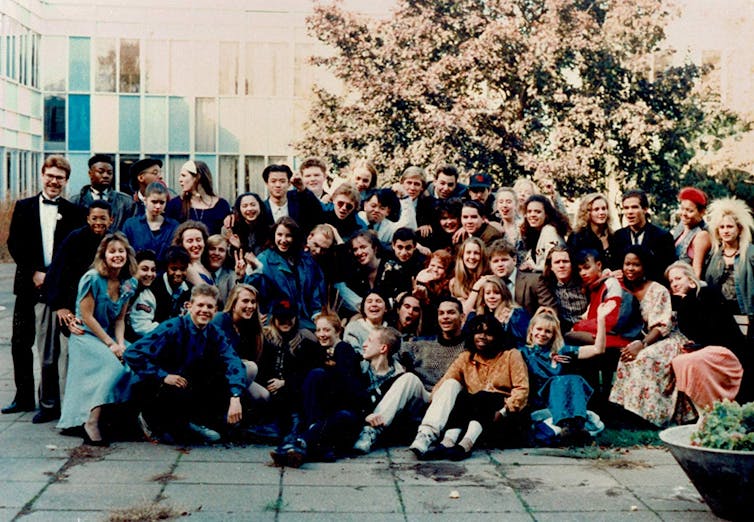

Canadian series Degrassi Junior High
Canadian series Degrassi Junior High (1987-89) and Degrassi High (1989-1991) were pioneering in their focus on teenagers and willingness to confront mature topics including drug use, teen pregnancy, racism, and sexuality. The ultimate dark and vindictive side of school friendships were most memorably fictionalised in 1988’s Heathers, which darkly satirised teen suicide. Reflecting a significant transformation in real-world schools, the recent television reboot of Heathers had its premiere delayed for almost a year because of the Parkland, Florida school shooting.

Some of the longest-running American TV series set in schools in the 1990s nevertheless idealised beautiful, popular, and often wealthy students. Both the Saturday-morning comedy Saved by the Bell (1989-1993) and the prime-time drama Beverly Hills, 90210 (1990-2000) were largely told from the perspective of fashionably dressed and perfectly coiffed characters at the zenith of the social hierarchy.


Outsiders and underdogs

Australian school stories have differed from their British and American counterparts from the outset. Henry Handel Richardson’s classic novel The Getting of Wisdom (1910), which was adapted into a film in 1977, is the story of poor country girl, Laura Tweedle Rambotham, who is sent to an exclusive Melbourne boarding school.

While the usual arc of the school story was to teach the outsider appropriate lessons about how to conform and contribute to school spirit and sporting success, Laura lies in an ill-fated attempt to be liked, cheats to pass her final exams, and finishes school without having found peer acceptance. It is her very inability to change herself to fit stifling gender and class expectations that has made her an enduring and beloved character for the past century.


Read more: The case for Henry Handel Richardson’s The Getting of Wisdom


Such irreverence toward authority figures is a frequent attribute of Australian stories about school. In its early years, teen soap Home and Away (1988-present) built many dramas around conflict with high-school principal Donald Fisher, who the students privately referred to as “Flathead”.


With conscious efforts to present a grittier and more realistic depiction of school life, Heartbreak High (1994-1999) not only included a cast that aimed to represent Australia’s increasingly multicultural society but depicted teachers as less authoritarian, and heavily invested in their student’s welfare.


In a reworking of the opposition between student and teacher, it has become common for Australian stories about school life to retain a focus on the underdog but to draw out its comedic potential. Hating Alison Ashley (2005), based on the novel by Robin Klein, cast pop darling Delta Goodrem as the beautiful, superficially perfect student, but presents the story from the perspective of friendless hypochondriac Erica Yurken.

Rather than a disciplinarian setting in which the teachers and principal have ultimate control, Barringa East high school exhibits a loss of adult order, with graffiti and rubbish covering the campus.

The film opens with the explanation that three teachers have retired due to the trauma of teaching at the school, with two institutionalised and one escaping to join the Hare Krishnas. While the overall culture of underachieving students allows Erica to shine academically, she does not feel comfortable in herself until she makes an unlikely friend in her imagined rival, Alison. A happy ending for Erica is found not in changing herself and achieving popularity, but in finding a supportive friend to join her outside the mainstream.


The trailer for 2005 film Hating Alison Ashley.

Chris Lilley’s Summer Heights High (2007) at once adopted the perspective of an underdog in the form of Jonah Takalua (a Tongan character controversially played by Lilley), and a queen bee in the form of Ja’mie King, a private school girl “slumming” at a state school.

Rather than glamorising the wealthy, image-obsessed Ja’mie, the series positions viewers to laugh at the shallowness of her manipulations to gain the approval of teachers and the few students she deems worthy of her attention. While many of the teachers at the school do care for student welfare, the infamous Mr G is the ultimate demonstration of the way teachers and authority figures are often depicted as flawed and ineffectual.
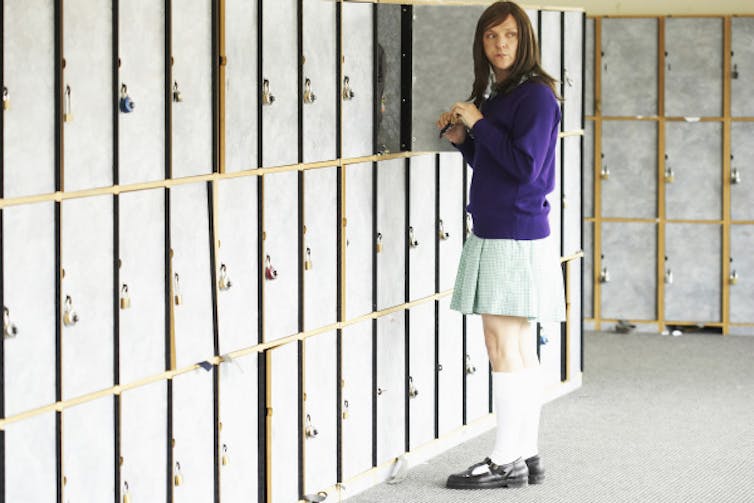
Chris Lilley as Ja'mie

Across time, Australian stories about school have more in common with the narratives of outsiders like Napoleon Dynamite than those of inspirational teachers as in Dead Poets Society or the beautiful students of Riverdale.

Attributes such as wealth, attractiveness, and family connections and status often distinguish the protagonists of American and British stories. Similarly, working hard and behaving correctly often brings success and popularity to these characters.

In contrast, Australian stories about school days are more likely to question structures of authority and social status. And anyone who wants to suck up to the popular kids or teachers can just, in the words of the students of Heartbreak High, “Rack off!”The Conversation


This article is republished from The Conversation under a Creative Commons license. Read the original article.

Saturday, November 30, 2013

Cultural Cringe and Ja'mie, Private School Girl

Lilley described as “a skinny, long-faced guy in his late 30s
flouncing around with what looks like a horse’s tail on his head”
in the role of Ja'mie. 
Originally published at The Conversation.

Australians love to know that we’ve been noticed overseas. When floods and fires strike, news broadcasts frequently ensure that excerpts from CNN or Fox are shown. It doesn’t matter if the event is a naturally occurring catastrophe rather than any form of achievement, we need to see that other countries registered our existence, especially the United States.

This need for external approval is related to Australian cultural cringe. When A.A. Phillips first used the term in 1950, he referred to the tendency to perceive Australian literature, music, theatre and art as inferior to British and European high culture.

Since then the need for overseas recognition in order to prove the worth of Australian creativity has extended to include all kinds of popular culture, including film and television.

In the past week, it has become national news that several American critics panned Chris Lilley’s current mockumentary series Ja’mie: Private School Girl after its debut on US television.

The AV Club gave praise to the work of Barry Humphries as Dame Edna Everage, but described Lilley as producing “sloppy, transphobic drag” in his performance as teenager Ja’mie King. Tim Goodman at The Hollywood Reporter complimented Lilley’s oeuvre in general, but found the new series “almost unbearable to watch”.

While the involvement of US network HBO in Ja’mie’s production gives a partial explanation for local interest in these negative American responses, cultural cringe is also a significant factor.

We can readily criticise one of the plethora of American television programs included in Australian TV schedules without it being seen as a reflection on American culture overall. Yet when one of our own productions achieves the rare feat of an international release, it is seen to bear the weight of representing us on the world stage.

Comedy induces far greater anxiety than any other genre. It reveals a great deal about a culture’s preoccupations, prejudices, and character—it tells viewers who we’re laughing with and who we ought to be laughing at.

We generally accept that there are national differences in comedy. For example, American humour, as reflected in its film and television, is seen to differ substantially from British humour.

Australians continually express cultural cringe about how our own comedic inflections, especially in programs such as Lilley’s, as well as Kath & Kim, give an impression that we are unsophisticated, racist, sexist and homophobic.

When news of Hey, Hey It’s Saturday’s “blackface” skit drew international attention in 2009 due to the outrage of guest Red Faces judge Harry Connick, Jr., the rightful embarrassment that this kind of humour would have otherwise gone largely unremarked about in Australia was palpable.

Lilley’s previous series Angry Boys also prompted debate in the US, especially given his use of blackface to portray rapper S.mouse. Australian site The Vine interviewed US hip hop artists to collect their largely condemnatory comments about the appropriateness of a white actor playing an African American character and the show’s use of racist terms.

Lilley’s adoption of blackface and “yellowface”, with character Ricky Wong in We Can Be Heroes, can be understood as more complicated than expressions of outright racism than these American responses identified.

As Lisa Bode shows, We Can Be Heroes made “ visible tensions and contradictions within contemporary Australian national identity, as well as the truth of white economic and cultural privilege within a dominant discourse of celebratory multiculturalism that seeks to mask it”. Though there is nothing to prevent racist or non-PC celebrations of some of Lilley’s characters, several of his series also work to expose the racism that lies at the core of supposedly upstanding and accepting Australians.

Ja’mie is a prime example of this tendency in Lilley’s creations. She brings a Ugandan boy, Kwami, into her palatial family home for the sole purpose of appearing charitable in order to receive a prestigious school medal. Yet her performance of tolerance and racial equality is just that. She is mortified when he expresses affection for her, telling Kwami “no offence, but you are really povvo, you live in the western suburbs, and you’re black, and I am… this”.

While the politics of drag, blackface and yellowface are highly fraught, we should not base our anxieties about Lilley’s programs on international perceptions of what is and what is not funny.

Our television comedies often mirror unique aspects of Australia’s cultural make-up and shared history that are largely incomprehensible to those outside of it, in a way that US and British comedies are not unintelligible to us, with our large quota of foreign programming.

When some programs mysteriously find a niche despite their idiosyncrasies, as did a dubbed version of Hey Dad! in Germany, it’s a positive thing for our television industry. Yet we shouldn’t seek to iron out elements of Australian humour because of perceptions that our culture is inherently not good enough.

Tuesday, November 19, 2013

Boobs vs Brawn: The TV Debut of "Lingerie Football"

Originally published at The Conversation.


7mate will broadcast the first season of the new Australian Legends Football League beginning in December. While the name might make you think that retired footy greats are strapping on their boots again, it’s actually the less overtly sexist guise of what was formerly known as the “Lingerie Football League”.

After exhibition matches in 2012, Australia now has its own league of female gridiron players who only just happen to be wearing uniforms that resemble bras and underwear. The garter belts and lace that were part of the “lingerie” uniform have been dispensed with, but the promotional images suggest that lashings of baby oil and spray tans remain.

There is no doubt that many of the women who have been recruited for the teams are extremely fit and athletic. One new Australian LFL recruit, Elise Chapman, who wrote a letter in defence of the league, played state-level volleyball, for instance.

Looking through promotional photos of the LFL on various sites sees few compliments on the players’ skills, but many references to how “hot” or “beautiful” they are. None of the women have stockier, muscular builds that are common in women’s rugby teams selected purely on athletic suitability for a contact sport.

It is not surprising that 7mate, a free-to-air channel aimed at male viewers under 50, has signed up to air the LFL.

The concept originated in “Lingerie Bowls” that were broadcast against half-time Super Bowl entertainment. Assistant Coach of one of the new Australian teams, the Queensland Brigade, Regan Webb, described the original incarnation in 2004 as “a half-time gimmick. Mitch [Mortaza, LFL founder] teamed up with Hugh Heffner [sic] and had the playmates dress up and pretend to play football”.


The sporting credentials of the players has improved since the first experiment with combining two hallmark interests of stereotypical masculinity: football and looking at scantily-clad women. Yet the commercial attention afforded to officially recognised women’s sports has remained dismal.

The sport played by the greatest number of Australians is netball, with 1.2 million participants. Yet netball is not a popular spectator sport in the same way as the two major football codes. This disparity, and the resulting lack of media attention and sponsorship, no doubt owes something to netball’s comparatively lesser status as a sport that primarily women play.

Where sponsor dollars, broadcast rights, and ticket prices rise exponentially in the major football codes, the trans-Tasman netball league was this year dumped from Channel 10’s schedule. These netball games are now shown on Fox and a “match of the round” live on SBSTWO. There is not room for even one women’s team sport to receive commercial airtime.

Inevitably there are arguments that women’s sport is uninteresting, slower, and less spectacular than clashes between Adonis-like men. Yet for sports that are regularly televised in somewhat equivalent fashion for both sexes, such as tennis and Olympic events including swimming and athletics, these alleged factors don’t seem to hamper public interest to the same degree.

It is therefore disappointing, but predictable, that a sports oriented station like 7mate has chosen to make its first ever female “sport” the LFL. It is a variation of football that was invented as something of a joke, has no established body of players in Australia, and which requires a uniform that is totally unsuited to the game.

Chapman, a WA Angels player, claims that in her years as a state-level volleyball player that there was little commercial or media interest in her sport. The LFL, she argues, is a chance for female athletes who have financed their low-profile careers to enter the spotlight and for their sporting prowess to be beamed across the country.

Regular television broadcast plays a significant part in popularising and maintaining public interest in individual sports. When the National Basketball League lost commercial coverage from the late 1990s to 2007 it had a major affect on its profile and commercial viability.

Televising the LFL will do little to promote recognised women’s sports and nothing to increase the likelihood that they will be picked up for broadcast. It will only reinforce the small-minded view that women’s sports are uninteresting for viewers unless the competitors look like they could pose for a men’s magazine.

While there can still be a place for “hot” female footballers on television, why can’t we also see women’s netball, AFL, cricket, and hockey games on commercial television? And how about regular reporting of results on the news and panel shows devoted to analysing them, as for the AFL and NRL?


Stations might suggest that they’re only working according to audience demands, but this ignores the role the media plays in contributing to perceptions about what kinds of sports, and which kinds of athletes, are important and worth watching.

Sunday, November 3, 2013

TV Presenters, Sexism and the Attractiveness Double Standard

Originally published at The Conversation.
Can you think of a female equivalent of political reporter Laurie Oakes on commercial television?

She would be aged over 60 (or 70 is Oakes’s case) with extensive knowledge of the area on which she reports. She would also not be conventionally attractive, likely with thinning hair and carrying excess weight. But she would keep her job because her intelligence and experience were trusted and respected by television viewers.

I’m assuming that you can’t answer this question because there is no equivalent to the older, trusted male television presenter when it comes to women. While dramas and sitcoms can reflect a more diverse range of women in terms of age, size, and even racial background, the female hosts and reporters of commercial television’s news and morning programmes, all largely fit a narrow mould of young, white, and thin.

The bias toward young female television presenters is not confined to Australia. A recent study of major broadcasters in the UK found that of all presenters aged over 50, only 18%t of these were women. Yet 39% of presenters overall were women, indicating that there is a firm “use-by” date for women that does not apply to men.

The use-by date applies because ageing women often cannot maintain the standard of youthful attractiveness demanded of them, but not their male colleagues. If nobody wants to see “old people” on television, why aren’t grey-haired male presenters also replaced when their jowls start sagging?

Last year journalist Tracey Spicer wrote about her treatment after the birth of her first child. Spicer was allegedly told that she was “getting a bit long in the tooth” and that she might want to make way for “some of the younger girls”. After the birth of her second child, Spicer was fired at the age of thirty-nine, though her employer, Channel 10, denied age or sex discrimination

In her Andrew Olle lecture, given just over a week ago, co-host of Channel Nine’s Today, Lisa Wilkinson, pointed out that the age of female journalists is usually mentioned immediately in media profiles “as if it is a measure of her sexual currency and just how long it will be before it expires”.

Her comments on the inordinate attention given to the dress of female presenters have also proven timely. Wilkinson remarked that as a woman on breakfast television “you quickly learn the sad truth that what you wear can sometimes generate a bigger reaction than any political interview you ever do”.

Just a few days after Wilkinson’s lecture, political journalist Annabel Crabb wrote about the laborious hair styling and make-up required for women to appear on television unless they wish to attract “howls, boos and vicious letters from members of the viewing audience”. Yet too much make-up can also elicit similar responses. Crabb mentions a recent email from an ABC viewer who disliked her make-up enough to liken her to a “two-bit hooker ready for a bit of business”.

We can acknowledge the sexism of television game show hostesses of the past, who were only allowed to silently smile and wave their hands around coveted prizes, while the male host did all of the talking. Yet the remains of this kind of sexism, in which women’s role relies on their conventional beauty, are still with us.

Advertisements for commercial news bulletins repeatedly use words like “experience” and “trust”. The camera usually focuses in on a male newsreader who has had a long career in the industry, such as Ten’s Mal Walden who is soon due to retire after a forty-year television career. Age is an asset for these male newsreaders, who acquire authority with the passing of years and the acquisition of more wrinkles.

On SBS, newsreader Lee Lin Chin, whose career began in the late 1960s in Singapore, is a rare exception. She is a woman over 50 who is valued for her experience and knowledge. However, the ratings-driven networks do not seem willing to allow women to enjoy long careers that are similarly based on their expertise, rather than physical appearance.

Some people will suggest that television is a visual medium and that men are also often selected for presenting roles based on their appearance. Indeed, television, like film, is not a representation of reality and there is no particular reason why, as with models, a particular subset of “attractive” people should not be hired.

What differs with TV presenters is that men regularly do not conform to what is considered attractive in terms of youth and weight, but are valued for their intelligence and an aura of reliability. This is not to say that the young women who are working in television are not equally capable or skilled, but rather to condemn the fact that they’ll never be afforded as many years in which to develop — and to earn a living — as their male colleagues.


Friday, November 9, 2012

Interview on "The Project" about women in combat roles

Last year I wrote an article for The Conversation about women in the Australian military after the announcement that the remaining male-only combat roles would be opened up to women. On 28 October, after an Australian Defence Force document listing the perceived risks to the ADF of women entering these roles was made public, I was interviewed on Channel 10's The Project.

Friday, August 19, 2011

Why Bert and Ernie Should Come out of Sesame Street's Closet

I had an article published in The Age and Sydney Morning Herald newspapers today responding to the debate that has ensued about Lair Scott's petition for Bert and Ernie to get married on Sesame Street. While almost 10,000 people have signed the petition to date, the very concept of gay characters on a children's TV show has sparked tens of thousands more to express their opposition to the idea of "inserting sexuality" into children's viewing time. Even some gay commentators think the whole concept is misguided.

Nevertheless, I thought the reactions that this little petition provoked were a good chance to think about why the representation of gays and lesbians in children's books and television is still considered so problematic.

Tuesday, December 14, 2010

T-Bag '80s TV series on DVD


I'm not sure how a child of today could ever proclaim to be "bored". With TiVo or Foxtel IQ (or whatever those special boxes are that 'record' all of your favourite shows digitally), online streaming, cheap DVDs and even, dare I say it, torrents, any television show or movie is available at almost any time. Kids once had to be judicious with their television scheduling. In Australia especially, with only four channels, the TV guide had to be memorised to ensure that a favourite wasn't 'missed' (and when you missed something you really missed it, potentially for years until a repeat was scheduled without notice) and prime viewing availability wasn't squandered.

One of the first programmes in my essential schedule was the British series T-Bag. It was effectively a live-action pantomine that was filmed inside a studio- the outdoor shots resembled The Wizard of Oz on a $100 budget- and was set in a fantasy world. The fantasy world was often located within a teapot from recollection. There is very little chance that T-Bag would get a look-in with child viewers today. The first series I remember, 'Wonders in Letterland', involved the girl heroine Debbie searching for a letter of the alphabet in each episode, with the villain T-Bag seeking to foil her at every turn. T-Bag had a boy side-kick, T-Shirt, whom she had effectively enslaved: he was forced to keep brewing her tea. I am aware this plot description might sound insane to readers outside Britain and Australia. You can watch a snippet on YouTube.

The series ran for nine years. The actresses playing the girl (whose name changed) and T-Bag changed several times, but T-Shirt grew from the cute little button you see on the front of the DVD cover in this post into a lumbering man during the course of the series. Never an auspicious beginning to an adult acting career.

With the 25th anniversary of the original series, the show has finally been released on DVD after relentless petitioning by nostalgic Gen X-ers like myself. I'm about to order the first set of two series, and I'm wondering how much I'll be disappointed after twenty years of growing up since I last saw it. In retrospect, I wonder if it was the female-centredness of the show that I really liked. Both the questing character and the villain are female. It was T-Shirt who was put-upon and who made the cups of tea, not the weak and downtrodden girl. And the set budget must have been redirected to the costuming of T-Bag, who never failed to be wearing an extravagant gown or elaborate headdress. The cardboard backdrops melted into insignificance with those outfits. Now they'd use CGI and T-Shirt would have hair like Justin Bieber.